
Home › Freeze-drying technique
Our technique
The technique behind freeze-drying
Freeze-drying removes moisture from fruit and vegetables at a low temperature, under vacuum. Below you can read how the process works, what it delivers and how it compares to conventional drying.
Our technique
Drying without heat, preserving the structure
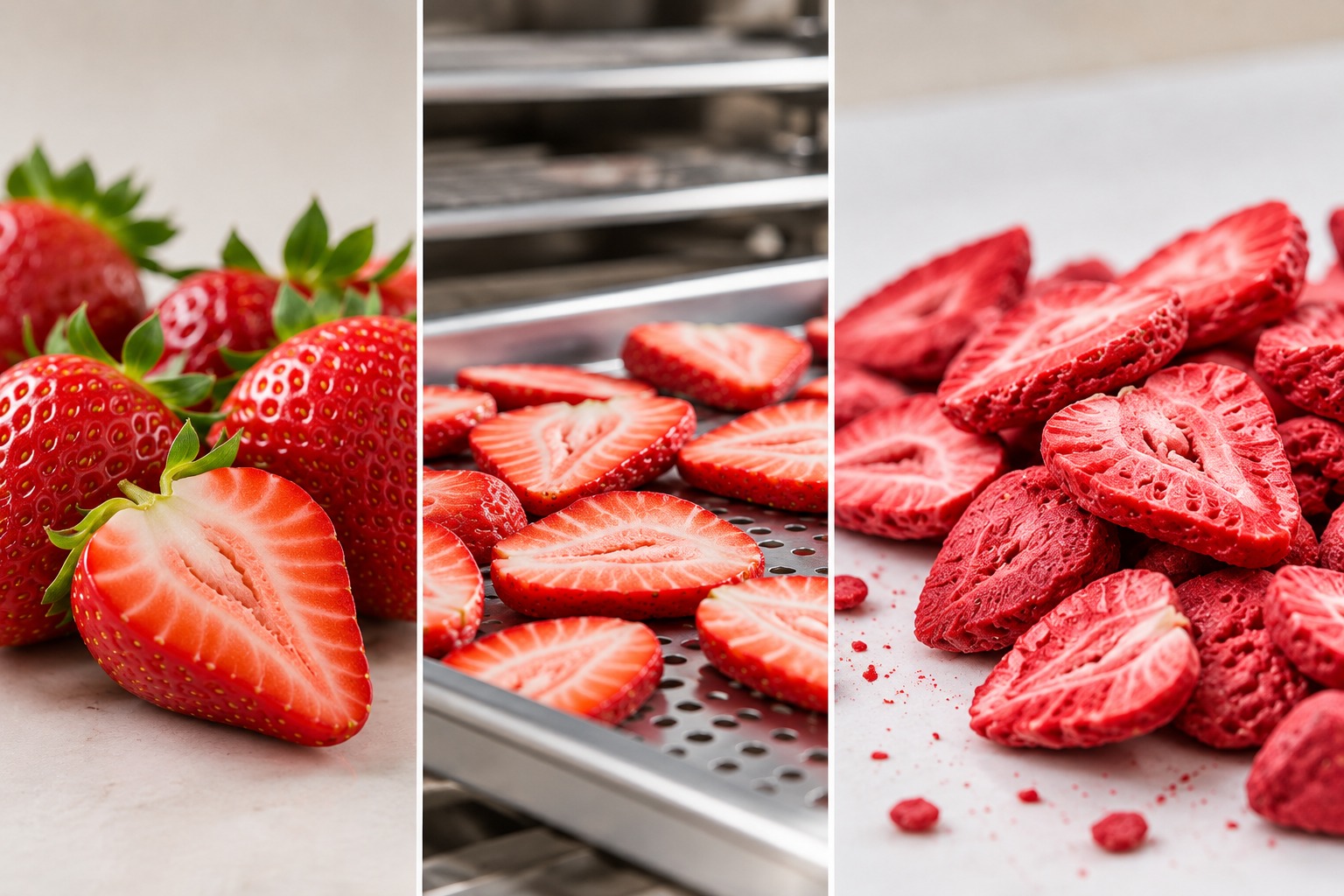
Freeze-drying is a drying technique in which frozen fruit or vegetables are dried under reduced pressure. The ice turns directly into water vapour, without passing through a liquid phase. The low drying temperatures help preserve the original structure, colour and aroma. This creates a dry, lightweight ingredient that retains much of the character of the original fruit or vegetable.
The process
Four steps from harvest to ingredient
The complete process takes several days. That time is exactly what allows the product to keep its structure, colour and flavour.
Preparation
The raw material is sorted, washed and cut to size for the intended application. A consistent product shape is the basis for even freezing and predictable dosing in your recipe.
Freezing
The product is frozen completely, so that the water it contains is locked into the cell structure as ice. Fast and even freezing forms small ice crystals and limits loss of structure in the next step.
Primary drying
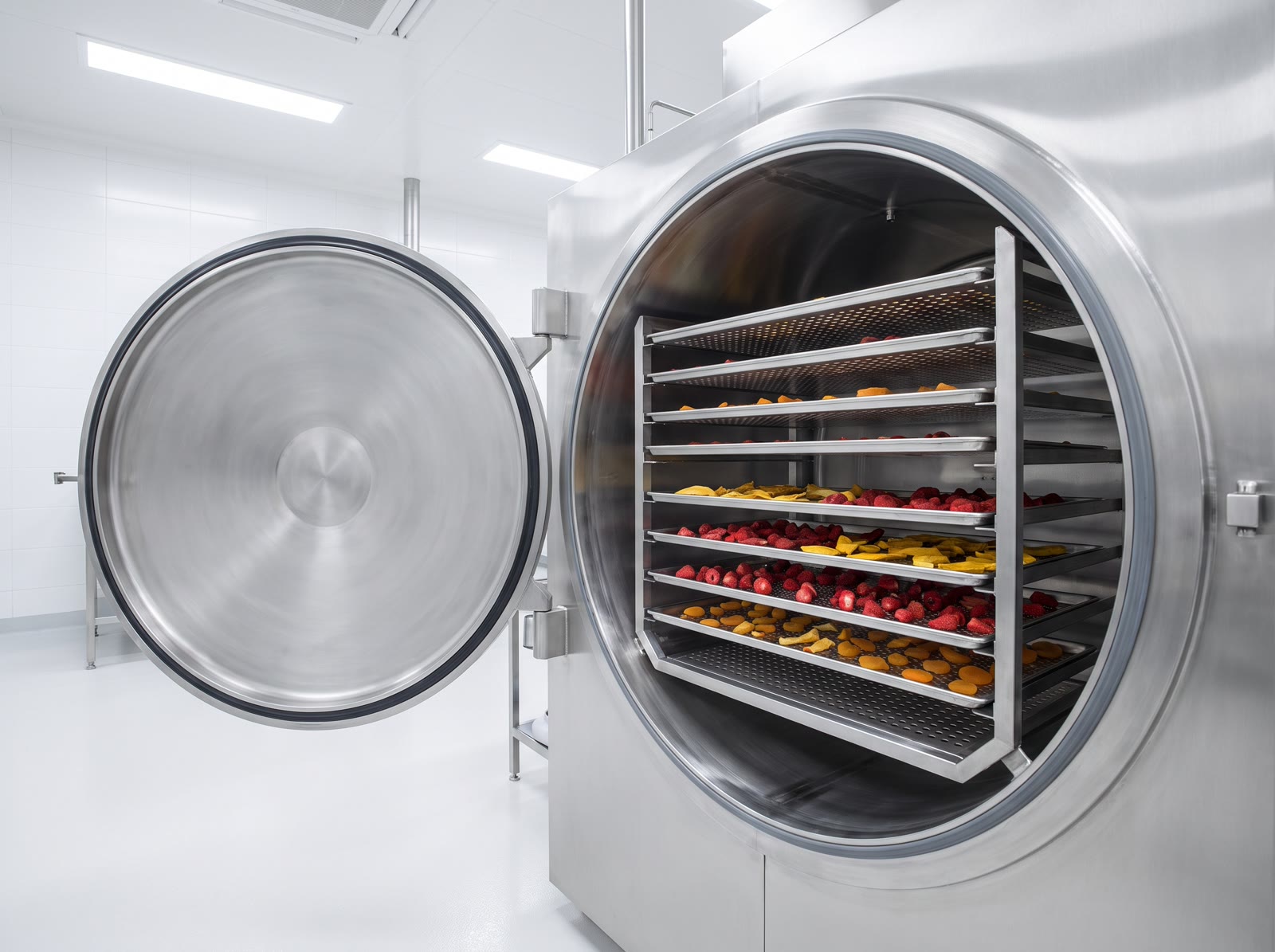
Under vacuum, the ice turns directly into water vapour without first becoming liquid. This sublimation step removes most of the moisture and takes several days, because the product stays cold.
Secondary drying
In the second drying phase, the remaining bound moisture is taken out of the product. This process is called desorption. It further reduces the moisture content and helps improve storage stability.
What it delivers
Properties of a freeze-dried ingredient
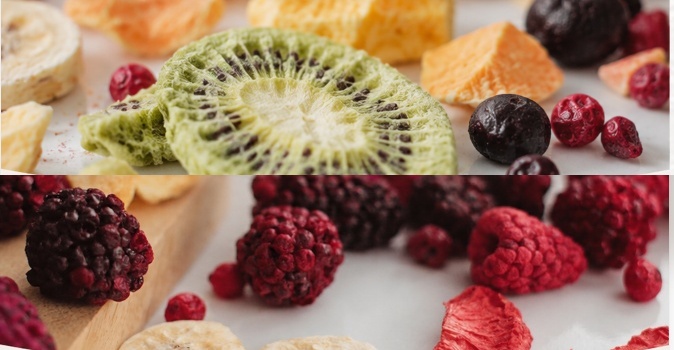
- Shelf life up to 24 months
- Low moisture content
- Concentrated fruit or vegetable flavour
- Natural colour
- Porous structure
Comparison
Freeze-drying versus conventional drying
In air drying, moisture evaporates under the influence of heat. This is faster and cheaper, but the product shrinks and loses colour and aroma. The comparison below applies to both techniques in general terms.
| Property | Freeze-drying | Conventional drying |
|---|---|---|
| Moisture removal | Sublimation | Evaporation |
| Heat exposure | Low | High |
| Shape and volume | Preserved | Shrinks or shrivels |
| Colour | Remains recognisable | Fades |
| Aroma | Well preserved | Partly lost |
| Structure | Porous, crisp | Compact, chewy |
| Rehydration | Fast | Slow |
In your recipe
What this means for your production process
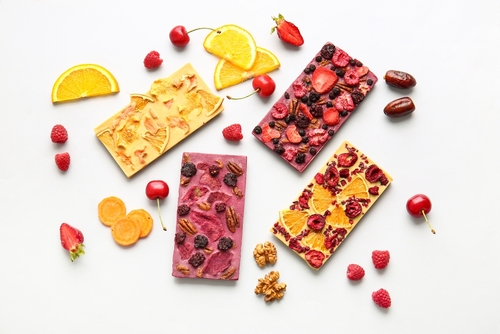
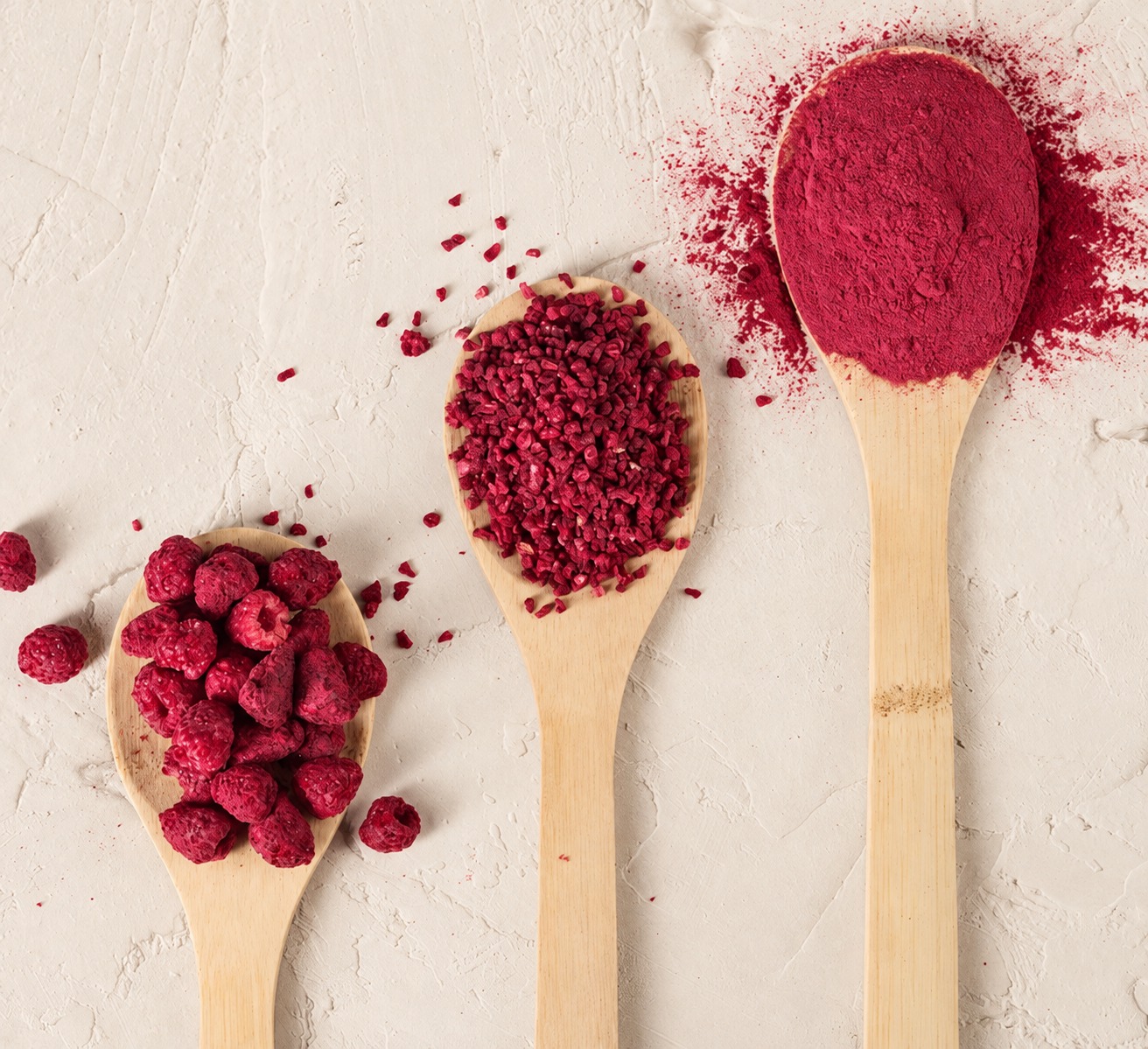
Freeze-dried ingredients are lightweight and easy to dose, even in small quantities. Whole fruit, slices, pieces and cubes can be incorporated as individual components, while powders can be blended with other ingredients. The choice of product format and particle size depends on your formulation, processing method and the desired texture of the final product.
Looking for a supplier that works with you?
Tell us about your application. We advise on form, particle size and packaging, and supply a trial batch so that you can test the ingredient in your own recipe.